Tag: #space

Articles related to space

science

Europa Clipper to Fly Past Earth on Dec. 3 for Speed Boost and Instrument Checkout

NASA’s Europa Clipper will fly about 2,000 miles above Earth on Dec. 3 to gain speed toward Jupiter and let teams test all nine science instruments.

#space, #europa, #nasa, #jupiter

technology

NASA Opens Bids for Lunar Reactor-1, a 20‑kW Fission Power System Aimed to Be Launch‑Ready by 2030

NASA issued a solicitation on Nov. 23 for Lunar Reactor‑1, seeking industry teams to design and test a 20 kWe fission system for the moon by 2030.

#nasa, #nuclear, #space, #moon

science

Euclid paper details computing system that processed 35 million jobs for DR1

Euclid’s DR1 relied on a multinational ground data system that ran 35 million jobs and 6.7 million core‑hours to produce public images, catalogs and spectra.

#euclid, #astronomy, #data, #space

science

Webb Captures Clearest View Yet of a Rare Stellar Merger in Andromeda

James Webb’s mid-infrared observations let astronomers trace a likely stellar merger in Andromeda, offering a rare real-time test of common-envelope evolution.

#astronomy, #space, #webb, #stellarmerger

science

Study: TESS Saw Transits of Exoplanet TOI-2535 b Fade and Disappear

Astronomers report the first confirmed case of a planet’s transits disappearing: TESS saw hot Jupiter TOI-2535 b’s transits stop as a companion tilted its orbit.

#exoplanets, #astronomy, #space, #tess

science

Preprint Models Hypothetical 1‑Megaton Nuclear Blast in Space That Could Disable Nearly All LEO Satellites in a Week

An arXiv preprint models a hypothetical 1‑megaton nuclear blast at 500 km over the South Atlantic, finding it could disable about 98% of LEO satellites within a week.

#space, #satellites, #nuclear, #orbitaldebris

science

NASA seeks commercial plans to boost, service or retire Hubble Space Telescope

NASA issued an RFI asking companies for concepts to raise Hubble’s orbit, perform on‑orbit servicing or enable a safe end‑of‑mission disposal.

#hubble, #nasa, #space, #servicing

technology

NASA Recasts Artemis III as 2027 Orbital Test, Pushing First Crew Moon Landing to 2028

NASA will use Artemis III as a 2027 low‑Earth orbit test of Orion with Blue Origin and SpaceX lander hardware, deferring a crewed lunar landing to Artemis IV in 2028.

#space, #nasa, #artemis, #spaceflight

science

Japan Launches MMX Probe to Study Mars' Moons, Seeks Phobos Sample Return

JAXA launched the MMX spacecraft from Tanegashima on Oct. 20 JST to study Phobos and Deimos and attempt the first sample return from the Martian moons.

#space, #jaxa, #mars, #phobos

technology

Japan Sets Precise Launch Time for MMX Mission to Mars' Moons

JAXA set a firm launch time for the MMX mission: liftoff aboard H3 from Tanegashima at 4:41:03 a.m. JST on Oct. 20. MMX will study Phobos and Deimos and return samples in 2031.

#mmx, #jaxa, #mars, #space

technology

NASA to Hold Oct. 23 Briefing on Accelerating Artemis Program and 2028 Moon Goal

NASA will brief the public Oct. 23 on plans to accelerate Artemis, update Artemis III and progress toward a U.S. lunar return by 2028.

#nasa, #artemis, #moon, #space

science

White House packages $6 billion-plus science agenda around AI, virtual biology and space reactors

White House bundled $6B+ in federal, private and philanthropic commitments around AI-for-science — virtual biology, quantum computing and space reactors.

#ai, #virtualbiology, #quantum, #space, #government

technology

GAO: Pentagon GPS Modernization Still Behind Schedule, OCX Cancellation Raises Risk

GAO warns Pentagon GPS modernization remains delayed and April’s OCX cancellation raises risk to next-generation satellites, M-code fielding and ground control.

#gps, #defense, #space

world

Preprint proposes using inspector satellites to detect hidden nuclear warheads in constellations

An arXiv preprint models how tens of inspector spacecraft could inspect thousands of satellites over years, using photon beams to detect a hidden nuclear warhead.

#space, #armscontrol, #nuclear, #satellites

science

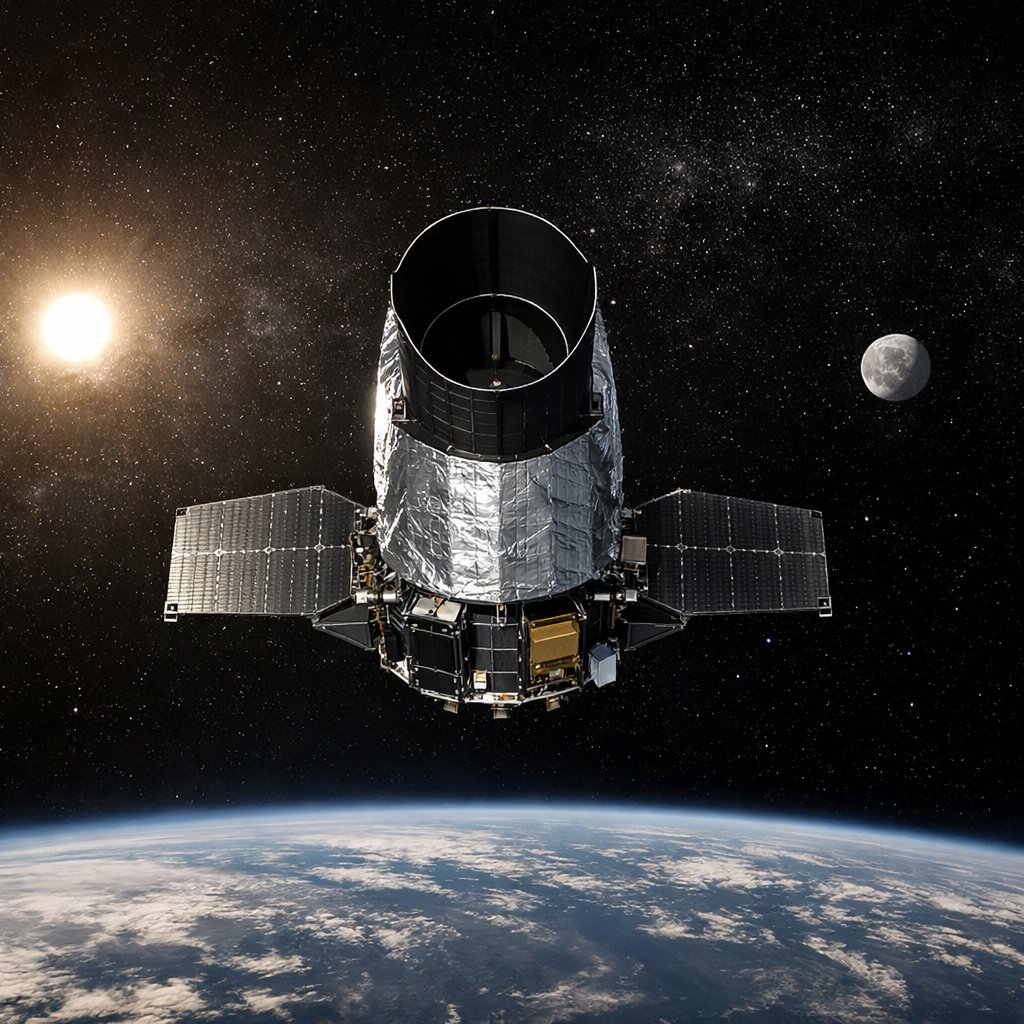
Roman Space Telescope Begins Three-Month Journey to Sun‑Earth L2 After Aug. 30 Launch

Launched Aug. 30, NASA’s Nancy Grace Roman Telescope is en route to Sun‑Earth L2 to map galaxies, probe dark energy and hunt exoplanets with a wide-field infrared camera.

#space, #nasa, #telescope, #astronomy, #roman